Monday, April 10, 2023

Dutch theologian and poet Huub Oosterhuis passed away

On Easter Day, theologian and poet Huub Oosterhuis passed away at the age of 89.

I had the pleasure of arranging the rights for a selection of his prayers and poems for the English anthology Times of Life for the Paulist Press in New York. The selection is from the Dutch language collections Hoe ver is de nacht and Dan zal ik leven. The translation is by N.D. Smith (Norfolk UK).

Publisher: Paulist Press 

Year of publication: 1979

Editions: 3

Paperback: 114 pages

ISBN-10 : 0809122456

ISBN-13 : 978-0809122455


Other translations (translations by N.D. Smith and rights managed by Frank Fehmers)

- Your Word is Near (1968);

-  Fifty Psalms (1973)

-  At Times I See (1974);

-  Prayers, Poems and Songs (1975)


Saturday, December 31, 2022

Tears from heaven...

When the Dutch radio news service interrupted regular programmes on the last day of 2022 for the obituary of the retired pope, Benedict XVI, it rained in the Netherlands.

Benedict XVI was averse to tradition. The only tradition he broke with as pope was his retirement. Otherwise, as pope, he was a fanatical guardian of tradition and the doctrine of faith.

Before taking office as pope, he was, among other things, the head of the Department of the Doctrine of the Faith at the Vatican. Originally from Bavaria, Joseph Aloisius Ratzinger had risen through the archdiocese of Munich to become prefect of the department of religious doctrine in the Vatican from 1981. He had become a kind of minister in charge of guarding the purity of religious doctrine. And he did so with great vehemence.

And Catholics in the Netherlands noticed that. In the 1960s, Dutch theology became known at home and abroad. Theologians from Nijmegen Catholic University became well-known Dutchmen, despite the Flemish origin of some. Schillebeeckx and Schoonenberg, in particular, trained a whole group of new theologians in the Netherlands and in Europe and regularly appeared on television programmes. 

The thinking of Dutch theologians was not only confined to the Netherlands. The second half of the 1960s saw a whole wave of translations of their works. For instance, Frank Fehmers, the later producer of the international television series Barbapappa, was an adviser to a religious book publisher in New York, the Paulist Press. He put books from Dutch publishers out for reading reports among theologians and theology students and, if the report was favourable, for translations. However, when Ratzinger started agitating against the new-lighters like Kung, Schillebeeckx and Schoonenberg and others as a scholar from 1972 and became prefect of religious doctrine at the Vatican from 1981, the wave slowly rolled to its death and churches in the Netherlands emptied.

Tears will be shed in heaven, but in the Netherlands it rained and people prepared to say farewell tot the year 2022.

Jak Boumans (aka James M. Boumans) M.Div. (Master of Divinity) translated Dutch theology books ( The Sacrament of the Eucharist) during his studies from 1966 to 1970 at Notre Dame Seminary in New Orleans, La.  In 1979, he handled the translation rights for Time of Life by Huub Oosterhuis.


Friday, August 26, 2022

Dutch vintage PC auctioned for 3.100 euro

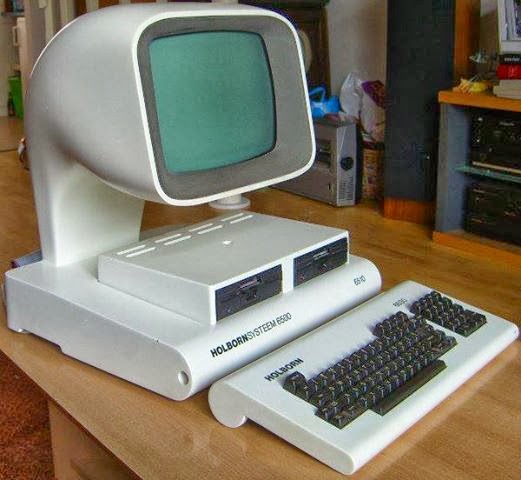
The illustration is of a Holborn 6500 and not of a Holborn 6110, which is up for auction.

Catawiki organised an auction of vintage computer objects last week.  This new section at Catawiki of vintage computer objects differs from the other offered computer objects of common portable computers and tablets. The vintage objects on offer come from the eighties and nineties. They are so far old calculators, but also Apple machines like MacIntosh and Indigo as well as Commodore machines (with or without packaging). But at this auction it was possible to bid on a unique machine. And that was done by 10 bidders with a hefty price for the winner of the auction. It is not about millions as with the first Apple machines, but for a Dutch PC, 3,100 euros, excluding auction and shipping costs, is a considerable amount. This while the machine is no longer functioning due to a problem with the motherboard.operational.

But it is a Holborn (Born in Holland), made in a company that from 1979, exclusively manufactured PCs. The hardware of the machine was designed by Hans Polak together with Henny Bevers and the design of the futuristic terminal was made by Vos Industrial Designers. Inside, the terminal was a modified MicroBee monitor and used a Z80 processor. The Holborn used the operating system CP/M.

Article in the Tubantia of 21 May 2021, saying that this Dutch invention from 1978 could have beaten Apple: unbelievable, but no one saw it.
 

The company Holborn started with its headquarters in Holten in 1978. The first manufacturing facility was in Hengelo and later in Enschede. The company operated only briefly, from 1979 to 1983, when it went bankrupt. The company developed two production lines: the growth computer the multi 9100, an expandable, customised business system with a self-developed operating system Holborn Operating System (HOS); later the 7100 version was released, which could be expanded to the 9100. But Holborn is better known for the stand-alone Holborn 6110 under CP/M and the prototype 6500 both with the science-fiction-like monitor. There were probably only 100 devices of the 6110 produced and sold, mostly to small companies for administrative purposes. The styled and ergonomic machine was initially priced at 30,000 guilders (approx. 14,000 euros). In the Netherlands, the company had to compete against larger home-grown machines such as Elektrologica and Philips, but also against cheaper office machines such as Wang. And the real competition came in 1981 with the introduction of the PC by IBM and later clones.
 
The auction item is a Holborn 6110. The offered system consists of a keyboard monitor console and an external box with two floppy disk drives. The system was originally purchased in the early 1980s for about 20,000 guilders as a medium-sized business computer.

This computer stopped working in 1996. Recently, the computer has been turned on, the disk drives turn on and the fan on the computer turns on. The screen does not turn on and it seems, that it failed to repair a part on the motherboard.
 
Personal note.
I was introduced to PCs in 1980 at the new media laboratory VNU Database Publishing International (VNU DPI). in Amsterdam. There was an Apple IIe present, but the automation department of VNU had bought a large batch of Superbrains (talking about AI) and handed out these machines, which worked with the CP/M operating system. The Superbrain was ergonomically a clunky machine, where you could get problems with your right hand from the raised edge at the keyboard. Sitting behind the Superbrain in 1980. (Photo Coll. JB)

Saturday, August 06, 2022

First .nl novel in LHBT+ collection National Dutch Library

The Internet and the Dutch web have been important media for the emancipation of gay and lesbian people and/or transgender people in the Netherlands. The KB has therefore built up a special web collection of lhbt+ websites between 2018 and 2022. The abbreviation "lhbt+" stands for lesbian, gay, bisexual, transgender and the sign "+" for all other possible sexual and gender identities of people who are also considered part of the lhbt+ community or who consider themselves part of it.

The special lhbt+ web collection includes websites from the Dutch web domain that can be a source of the lhbt+ community and culture or a reflection on them in Dutch society. These sites may not only reflect lhbt+ culture or heritage, but may also be the online harbingers of trends and developments in society and as such are worth preserving for future research. In addition, a site can also be a historical source of the difficult position this group of people was and is in, and of the discrimination and exclusion this community still faces today.  With this special web collection of websites with the lhbt+ theme, the KB aims to preserve digital information from the past about this population group and their culture for research in the present and the future. This way, the digital history of lhbt+ is kept alive and the preservation of this heritage and social acceptance of this group is promoted. We also show that the lhbt+-past is an important and underexposed part of Dutch history.

First online .nl novel had a lhbt+ theme

The first Dutch novel on the Dutch web appeared online in 1994 and was written by Marcel Bullinga. This was also a novel with an lhbt+ theme. The first Dutch language internet novel 'Roes der Zinnen' was published by the author at his own expense and risk. ... Thanks to web archaeologist and digital historian Jak Boumans from Almere, it was possible to acquire a physical copy of this novel for the KB collection. The floppy disk was still present in his personal collection.

https://zenodo.org/record/6624358 + powerpoint presentation


Read more about the Roes der Zinnen and the 'excavation' in the blog First .nl novel 'excavated'
https://buziaulane.blogspot.com/2020/06/first-dutch-online-nl-novel-surfaced.html


Thursday, June 30, 2022

Exhibition Water-Polder-Weerwater in new city Almere (The Netherlands)

Press release

The Almere City Archives Department has put together the exhibition Water-Polder-Weerwater (lake in the center of the city).  By means of photographs, design sketches and letters from the collection of the city archive, the special history of the polder, Almere and the Weerwater is told. The exhibition, in Dutch and English, especially for Floriade visitors, can be seen from July 1st to December 2022. 

The name Weerwater explained: When you put the press release through translation software, Weerwater is translated as Weatherwater. But this is not the proper translation. Weerwater means Water again. The city arose from the water of the IJsselmeer in a polder. And in the city a lake was created, so there was water again.

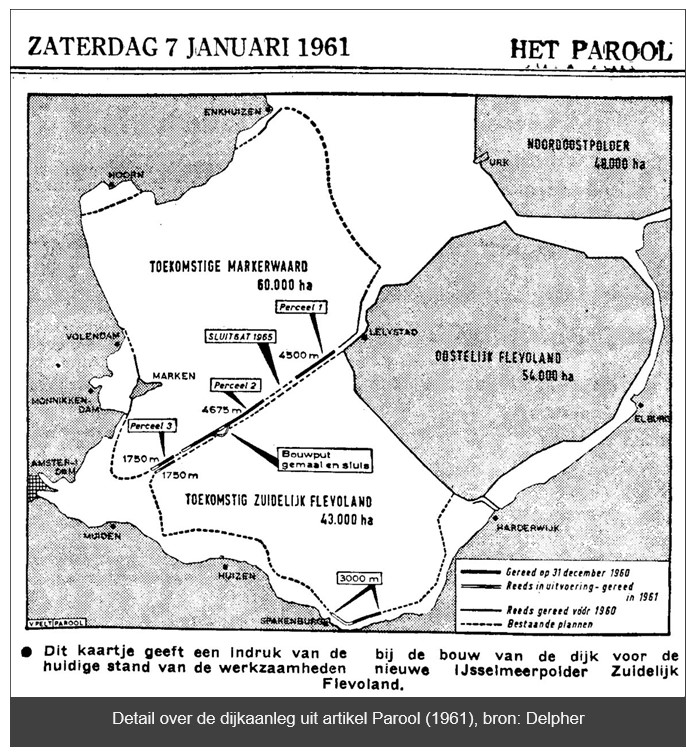
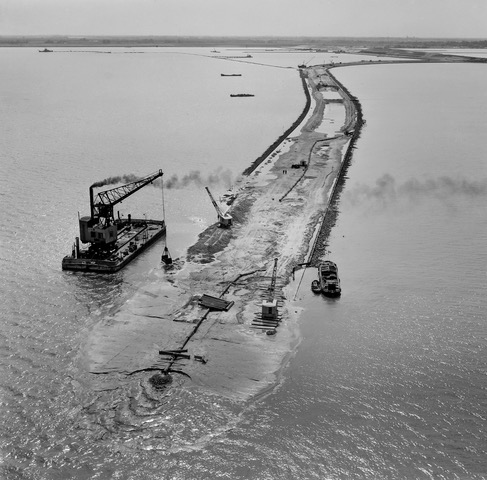
Water-Polder-Weerwater shows step-by-step how in the 1960s land was reclaimed from the water of the IJsselmeer and how, in the middle of the just-drained polder, a lake was created. How do you actually create a polder? And why a lake in the middle of the city?  The exhibition also takes a look at the primeval forest and the Weerwater Island on the Floriade grounds, as well as future developments around the Weerwater. The exhibition also unravels the story of why the Weerwater is not called Central Lake or Placenta.


The creation of the new city of Almere from the water in four illustrations: the design of the polders, the construction of the dikes, the sketching of the new city, the Weerwater as the heart of the new city. 

During the preparation of Water-Polder-Weerwater, special design sketches by urban planner Teun Koolhaas from 1973 were rediscovered in the archives of the City Archives Department. In addition to a large number of sources from the collection of the city archive, the exhibition also includes photographs from the Flevolands Archief, newspaper archive Delpher, the Bart Hofmeester/AeroCamera archive and Het Nieuwe Instituut (.Museum for Architecture, Design and Digital Culture, where the National Collection for Dutch Architecture and Urban Planning is being preserved). 

Water-Polder-Weerwater is aimed at Almere residents who want to know more about the history of their city and at (Floriade) visitors who may not realise that they are walking and travelling on the former seabed of the IJsselmeer. On the wall of Stadsarchief Almere there will be a mark indicating how high the water would be without the dikes.

The exhibition and the accompanying brochure (32p) are bilingual  in Dutch and English. The exhibition is also accompanied by two videos with teh City's godfather Paul de Maar, policy officer , city ecologist Annemiek Eggenhuizen and researcher/artist Krijn Christiaansen.

Information on the exhibition and venue 

Opening times: The Water-Polder-Water exhibition is open from 1 July to December 2022 on Wednesday, Thursday and Friday from 13.00 - 17.00 and on request at the City Archives venue, Stadhuispromenade 2, 1315 XP Almere, opposite Stadhuis, left side under the library. 

Visit stadsarchief.almere.nl/weerwater for more information and current opening hours. Eventually the exhibition will be available online.


Thursday, June 16, 2022

Growth Dutch new town Almere seen from the clouds

This book is about the new town Almere in The Netherlands. This city does not count its age in centuries, but in less than 50 years. The first eight families got keys to their cabin chalets in 1975 and the 400 first occupants received their keys to the constructed houses in 1976. It is a city that arose from the water, when in 1964 the construction of dykes began and in 1968 the polder Zuidelijk Flevoland was reclaimed. Almere is the newest city in the Netherlands since 1975 and became a municipality in 1984 and is now the eighth largest municipality in the Netherlands with 230,000 inhabitants.

Unique book 

The book Almere vanuit de wolken (Almere from the clouds) is a large and weighty book. The book contains more than 200 aerial photos in landscape A4 format and weighs almost 2 kilos. It is also a unique book, because the 200+ aerial photographs show the development of the new town Almere from 1964 to 2021. Publishing house Watermerk has made similar books of The Hague, Rotterdam and Dordrecht, but Almere can show its entire history in aerial photos.The book was created as a sequel to the exhibition Almere from Above, organised by the City Archive of Almere from August 2020 to September 2021, with aerial photographs of the development of the city, on display at the City Archive and at three other locations in the city. 

The exhibition showed a limited selection of aerial photos from the collection of the City Archive, from old black-and-white photos from the 1960s to recent colour shots. From these, a selection was made for Almere Boven, which together tell the story of the multi-kernel city and its enormous growth over the past 50 years.

The exhibition showed a limited selection of the 25,000 aerial photographs in the collection of the City Archive Almere. But the reactions to the exhibitions asked for more. That was the reason for Michel Langendijk, together with Bart Hofmeester of Aero Camera and Roel Dijkstra, to research material for a book. Michel Langendijk had been involved in the composition of Almere Boven and Bart Hofmeester (1921-2021), who had made aerial photographs of Almere since 1964. Roel Dijkstra manages the collection of Aero Camera since the death of Bart Hofmeester and he made the actual photos of 2020 and 2021. The book contains a foreword by one of the pioneer urban planner Brans Stassen. There is also a short introduction.

The photos do not form just a series of sequential historical photographs, but show the historical photograph with a current photograph, taken from the same point of view. For example, the eight mobile homes surrounded by a wasteland in Almere Haven are shown with photograph of the present buildings. This editorial formula is maintained throughout almost the entire book.

Use 

The book is a nice book for an Almere resident to leave on a coffee table when welcoming visitors, or to give as a present. But the book deserves a wider distribution.

For the early inhabitants of Almere, the book is not only interesting to leaf through and to search for their house (and/or former houses). I had the pleasure of looking for photographs of the Bivak in Almere Harbour with the very first Almere resident, a mobile home owner and police officer Wim Leeman.

(Insert) Mr Wim Leeman indicates where the eight mobile homes of the Bivak were situated; (left) the Bivak, (right) mobile offices.  

But the book can also be used by professionals in urban design and planning such as urban developers, urban planners and architects. For them the book presents the creation and rapid growth of a new town within half a century. The photographs show the development of the city kernels, the green spaces in the neighbourhoods and between the kernels, the infrastructure, the separation of residential areas and industrial estates, the bus lanes and the network of cycle paths. 

Almere from the clouds, compiled by Michel Langendijk, publisher Watermerk BV, Dutch language, EAN 9789078388302, 264 pages, 1853 grams, 39.95 euros


Tuesday, May 31, 2022

Pioneering Dutch IRMA app points the way for new European digital identity

Users keep full control of their personal data

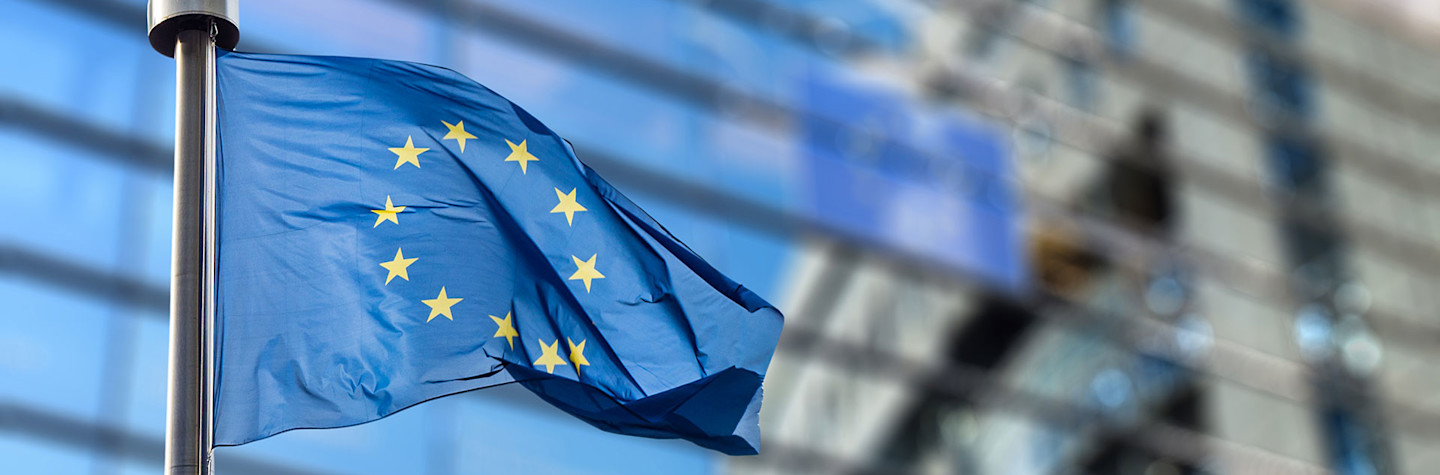
Waving flag of the European Union in front of the European Parliament building in Brussels, Belgium

Earlier this month, the European Commission set out a framework for a European digital identity. The plan envisages an e-wallet for every European citizen, resident and business, enabling them to validate their identity and share all kinds of digitally authenticated documents. So that, whenever you need to show something like a driving licence and educational qualification – or demonstrate your medical status in a situation like the current pandemic – you'll be able to do so using the new system. The European Commission will provide the legal framework (based on eIDAS) and the technical standards for interoperability. Individual member states and commercial players will then ensure that, for example, a Dutch ID app works in France and a French citizen can prove their identity in the Netherlands. 

Various ID apps are under development around the EU and beyond. But, in IRMA, the Netherlands already has a working app that's ready for large-scale rollout now. IRMA does exactly what the Commission is suggesting the European Digital Identity should do. You could even say the Commission has completely embraced the philosophy underpinning the Dutch IRMA app.

Read the full article: https://bit.ly/3adqUSY

Sunday, May 29, 2022

The algorithmic beauty of plant

Wednesday, June 1, 2022 from 19 - 21 hours in DDAMA (Dutch Digital Art Museum Almere) opening of two new exhibitions that are related to the theme of the Floriade: The algorithmic beauty of plants and Glitched Lovescapes. In the Euro-tower (now Rabo) next to Almere CS, Landdrostdreef 124, 2nd floor, 1314 SK Almere (The Netherlands).

DDAMA has been around for more than five years and is like a young, ever-blossoming plant that has to survive without the care of the municipal parks department. Perhaps it is because of the rarity, the exotic, the newness, there are only a few in the world, that this young striking flower does not yet get the attention it deserves. We, Dutch, cling to our traditional tulips and daffodils or get palms and cacti from afar and have little eye for a spontaneously generated local new variety. Unknown makes unloved.

In the exhibition with the theme The algorithmic beauty of plants local artist Jan Coenen is represented with three works with the subject "growth" and with the theme of the Floriade, "growing green cities", in mind. Two of these works are projections of digital algorithms and the third is a combination of a watercolor of 4.5 by 1.5 meters with a video based on an algorithm. When visiting the Floriade at Almere do come and visit DDAMA.

Growth is change. Growth is becoming, not being 

People, flowers, plants, forests, cities and museums grow.

The artworks on display depict the laws of growth. One can see how simple mathematical formulas underlie the growth of plants, of nature, but also of cities. These mathematical models (fractals), like growth in nature, have the property of repeating endlessly within limits without being the same.

After centuries of development, during which man has freed himself from the whims and dangers of nature, there is now a growing realization that we are part of nature, that we should not spoil nature, that we should not continue to look on from a distance, but that we should merge back into it. The works are also about looking, about perceiving nature and art, about distance and involvement.

© 2022, Jan Coenen


Monday, April 11, 2022

Towards a Digital Culture in local and regional newspapers in Finland

The publishing sector has been struggling to reach a digital culture over the years. Especially the newspapers are in a transfer situation going from paper to a hybrid situation to digital first. Especially for local and regional newspapers this has been a battle.

Marja Heinonen, a Finnish consultant, has written a report on the route towards a digital culture in the Finnish regional newspaper Karjalainen from 2019 to 2021.

Background 

Regional and local media in Finland are fighting for survival alongside the rest of the media landscape. Two big questions for the media industry in 2022, both in Finland and globally, are a viable business model and a sensible way to organise in a digital environment. The latter is an essential part of the realisation of the former. Circulation of printed newspapers has declined almost without exception over the last 15 years. Vitality and growth will have to come from elsewhere. The key path chosen is the shift from print to digital media. Karjalainen is at the forefront of regional and local media in Finland, making a systematic and comprehensive shift towards digital media.

Karjalainen is a medium-sized regional newspaper that is number one in its region and has a strong brand in people's minds. In January 2021, the total number of sta was 47. This figure included contributing editors, photographers and archives. There were 33 writing journalists.

In 2018, Karjalainen decided to shift its focus to digital, i.e. to start making media strongly online. In 2018 it created its first digital strategy and systematically started changing its operations and organisational culture. This change was seen in Karjalainen as an ambitious and wide-ranging shift in approach and culture, not just small tweaks. The transition reached full speed in 2019. Deep change will only happen if the culture of the organisation is supportive of digital transformation.

One major step - and the core focus of this report - was taken in September 2020. Karjalainen’s top management started planning an organisational change in the newsroom - to build an organisation that supports better new digital doing. To push forward “digital first” thinking.

A new organisation was implemented in January 2021. The old structure was demolished. New teams and roles were created, print and digital were separated, and all positions were open for everyone to apply. The change process was based on inclusiveness, open interaction, a culture of experimentation, and responsibility-sharing.

In addition to the planned measures, in 2020, Karjalainen's digitalisation process was also influenced by the Covid-19 pandemic, an external factor that shook the world globally.

This paper describes newspaper Karjalainen’s transition process in organisational reform, which took place 2021 and assesses how the reform was received in the newsroom. It also looks at how Karjalainen succeeded in its strategic project towards digitalisation the newsroom in 2019-2021.

The documentation benefits the entire local and regional press scene in Finland and abroad, as the experience gained from the Karjalainen case both inspires and helps to design practical solutions for the press' own digital implementations. This study has been funded by Media Industry Research Foundation of Finland (Media-alan tutkimussäätiö).

The report is available at Academia (registered access):

https://www.academia.edu/73526990/Towards_A_Digital_Culture_Newspaper_Karjalainen_2019_2021


Wednesday, November 10, 2021


 Dutch Media Monitor 2021

Tipping point in digitization of media use and media concentration

The advent of the coronavirus and the associated measures have greatly affected our society. Our media behavior has also changed substantially. In particular, we used more media because we were at home more. We also consulted more news media brands because we wanted to stay well informed. We have started to do that to a greater extent via digital channels. But are these changes of a permanent nature? And are they taking place among all target groups? To what extent are media companies responding to this with their policies? The Mediamonitor 2021 shows that three underlying trends characterize the changing consumption and (partly) determine the strategic choices of media companies.

Download the Dutch language version of Media Monitor 2021

Trend 1: Digitalization of media consumption continues, despite temporary increase in consumption of traditional channels

The media sector was more than satisfied with the rising consumption of traditional media channels after years. In times of corona, people watch and listen to more television and radio channels. News and current affairs programs are popular, and are relatively little consumed deferred. However, this appears to be mainly caused by the age group of 65 years and older, who still like to watch not only news but also fiction linearly. Young people up to 34 years of age are watching less and less linear television. Of the total time they spend behind the television screen, only 50 to 60 percent is still spent on linear television. Listening time and reach of radio stations is also declining in the group aged 50 and younger, while it is quite stable or even growing across all Dutch people. Both watching and listening among young people is increasingly taking place via digital channels. This trend also continues in the first half of 2021. It therefore seems to reflect a lasting change in media use, which for the time being is slowly moving from young to old.

Trend 2: Streaming goes mainstream

The use of video-on-demand continued to grow in 2020; as did the offerings. More and more providers from home and abroad are offering high-quality content. The content is watched at the moment one wants it, but live streaming is also on the rise. Digital audio services-on-demand are also on the rise. The number of providers is also growing and people are increasingly willing to pay for content. In 2020, the previously initiated growth spurt of podcasts continued. The growth among young people has slowed down considerably, but there is still plenty of growth in the middle age group. We also see this in the video segment. Watching video content on demand and listening to audio content on demand has become mainstream in 2020 and is widely distributed across all ages. Only the oldest group is still slightly behind here.

Trend 3: Media channels converge

Whereas in the past there were clear dividing lines between media, we now see that most (larger) media companies are offering cross-media products. Publishers who have traditionally been providers of the written word are now getting into podcasts en masse. This is logical given the nature of the content they create. Magazines and newspapers are increasingly read digitally and television channels are launching new formats online first. News media brands are well found both online and via social media. This means that the dividing lines between medium types are blurring and it is becoming less relevant where people came into contact with the brand. Media companies are responding by positioning their media offerings under one recognizable brand. After NPO and AD, in 2021 this will also apply to NRC and RTL.

Dutch Media companies are in a tipping year

These trends in media consumption herald the tipping point year in the digital transition. Newspapers are well established digitally and broadcasters are increasingly finding the cross-media way. Cross-media scale, more paying subscribers and the ability to offer targeted ads to non-paying users who leave their login details could guarantee the survival of Dutch media companies.

At the same time, the pursuit of scale creates the risk of a sharp increase in concentration in the media markets, which could jeopardize pluralism and independence. In 2020, DPG Media acquired Sanoma and media concentration reached a new level. In 2021, RTL Group (Bertelsmann) announced its intention to acquire Talpa Network. After an unprecedented concentration in the publishing sector, a media giant in the field of audiovisual media now seems to be emerging in the Netherlands.

In the Media Monitor 2021 we analyze the background and discuss possible consequences of this concentration. We also provide a number of recommendations for maintaining a healthy media landscape in the Netherlands. In the coming years we will continue to monitor the consequences of increasing media concentration on the diversity of the supply.

 About the Media Monitor

The Dutch Media Authority has been monitoring media developments and their effects on the diversity and independence of the information supply for twenty years.

Translated with www.DeepL.com/Translator (free version)

Saturday, August 07, 2021

7 August 1980: First Dutch public online service

 Today the launch of the first Dutch, public online service Viditel will be commemorated in silence.  The service was launched on August 7, 1980 by the Dutch PTT Telecom. The technology was the telecom variant of teletext, in the UK Prestel; in Holland Viditel. PTT Telecom had set aside 40 million guilders, roughly 18million euro, for the project. It was not a success. Yet the service was the beginning of the 24/7 economy with James Telesuper and later Girotel from the Postbank.


The launch was done from Sneek by State Secretary of Transport and Water Management Neelie Kroes. In The Hague, where the press and videotex studios were present, all the lights went out as television and some photographers switched on their equipment. Was this an omen for success?

Want to know more about Viditel and its successors, read the blogs on https://buziaulane.blogspot.com

https://buziaulane.blogspot.com/2005/08/25-years-online-in-netherlands-compact_07.html

https://buziaulane.blogspot.com/2005/08/25-years-online-in-netherlands-compact_12.html

https://buziaulane.blogspot.com/2005/08/25-years-online-in-netherlands-compact_10.html

https://buziaulane.blogspot.com/2018/08/bpn-1740-videotex-e-phemeral-medium.html

https://buziaulane.blogspot.com/2018/09/bpn-1741-40-years-ago-dutch-consumers.html

https://buziaulane.blogspot.com/2015/01/bpn-1701-in-year-1980-start-of-dutch.html

https://buziaulane.blogspot.com/2013/07/bpn-1650-government-becomes-hacker.html