Tuesday, October 03, 2006

e-Government and South-Africa (2)

Today the official program on e-Government starts. Having registered again I discovered that the World Summit booth has been prepared already by the organization; they have set up the banners. It looks really good. The promised computers are not there yet and when they are finally there, they have a CD-ROM drive and not have an internal DVD player. But Terrapinn, the conference organizer, has that corrected before lunch.

John Joslin of Future Proof Consultancy opened the conference, reminding the audience of the adagio: if the bank can address me personally, why should the African governments not be able to do so. One of the top officials of the South African government, Mr Mavuso Msimang (see photograph), speaks on the unleashing of the potential of ICT applications in Africa. He is in charge of the office which coordinates and pushes e-Government in South Africa.


Mr Kgabo Hlala (see photograph) from the South-African Home Affairs really captures the audience. He is dressed in his summer suit, which means that the two sleeves of the cut have been shortened to half length. And he started with some capturing sentences, telling the South Afrikaners that they can not avoid the ministry of Home Affairs. When people are born they will have to tell the Homeland office; when they die, the relatives will have to tell the Homeland office. And in between the Office will issue ID cards and passports for crowd control. He brought it like a preacher and was able to keep the attention of the audience when he transmitted the message about integrated customer solution through the implementation of the smart card technology. The bad part about this speech was that I later herd that Mr Kgabo Hlala was going to leave the service as did his boss. So much of the policy he preached most likely will not be executed. But he presented one stunning Guinness Book of Records like fact: the Home Affairs Ministry has fingerprints of 29 million people (South Africa has 44 million inhabitants). It is the largest fingerprint database in the world.

After the speeches panel sessions are planned. The morning panel worked, but it did not provoke a discussion between the panelists and the audience, which consists mostly of government officials, amongst others a large contingent of the South African police department from Pretoria. The afternoon panels were a disaster. Many panelists did not show up, despite promises and confirmations by telephone. Responsible for the chair I had to improvise a lot. It gave me a good chance to show the categories of e-government and e-learning of the World Summit Award DVD. This drew a lot of attention from the people.

Tomorrow we will start again with a panel discussion, followed by a presentation. Again the programmed panel leader will not be present. So I have been asked to chair the panels in the morning. I certainly hope that all the panelists will show up. In the afternoon the Deputy Minister of the Department of Communications will address the audience about the ultimate approach to maximize public service efficiency and achieving customer satisfaction.

Tags:

Blog Posting Number: 528

Monday, October 02, 2006

e-Government and South-Africa (1)

So my first day is over. I sat in on a master class on e-Government given by John Joslin, CEO of Future Proof Consulting. He stood there in front of the participants for the whole, presenting his series of slides. The participants present were from South Africa and the larges delegation was from the police department. Bit there were also participants from Botswana. Together they made up an audience of 20 participants as the other 20 participants from Gambia were awaiting their plane to be readied and will arrive tomorrow afternoon.

John really took the audience through a class of e-government, starting with Moore’s law about the doubling of chip power straight up Service Oriented Architectures and cross agency integrated services for South-Africa. The first part was mostly technology for dummies with statement like “Broadband has been spreading due to technology and competition”. It looks like an open door, but with the audience present, it is not. Many of the officials present are looking whether a government service should stimulate broadband with grants and incentives. For most of the delegates broadband is when you get about 1Mb at a very high price. I heard many jealous sighs, when I told then I have cable access at a speed of 8Mbps at a price of 59 euro, including VoIP telephone; and I will change to 20Mbps next month for just 2 euro more.

But after the technical part he went into the organizational part and into the smart services; smart meaning simple, moral, accountable, responsive and transparent. A discussion got going on the method to introduce e-Government services among the government agencies and which department should be responsible. In South Africa the Department of Public and Social Administration (DPSA) is responsible with the Government Technical Office Council to control the central gateway.

But he got also into the four stages of maturity of e-gov services:
1. web presence of departments/ministries
2. Online information
3. Online interactions
4. Online transactions
Once the fourth level is reached there should be a transformation to citizens-centric government malls.

In the afternoon he hit on the subject of e-identification and especially on the smart cards, smart in the sense of intelligent. He dealt with the government smart cards with the basic data on the holder, but also on the cards with biometric data like fingerprints. (Giving fingerprints in South-Africa is routine; yet I have never given my fingerprints in the Netherlands. My fingerprints are with the US government, which I had to give when I requested a study permit in 1966. I guess in the Netherlands we associate fingerprints with criminals. But it will come back as biometric data). And then there is the government card combined with business applications. I learned that there was a common card project between China, Japan, Korea, Hong Kong and Singapore, called the Silk Road Card. But also in a country like Botswana there are 800.000 ID cards given out; Botswana is not exactly the first country that springs to mind when you talk about smart card. The representatives of Botswana in the master class confirmed the project and the figure. But real numbers are going to come when China starts rolling out its planned cards to 900 million citizens, 1 card for national security and 1 card for social security.

John Joslin was very fond of Canada (130 services computerized), Italy and Ireland as guiding lights as he was impressed with e-governing services in Brazil. He ended up with Service Oriented Architectures (SOA) of e-government services. He warned that services should be loosely coupled and message driven, rather than integrated in one monolithic service. The basic level should be that of data; they should be used in the services and not integrated with the services as data will have to be there for a lifetime and services will change over the years. He took this wisdom from an Irish e-government report and advocated this position to the South-African government.

It was a rather intensive, but gratifying day. After this satellite event, tomorrow the real conference will start with lectures, networking luncheon, a panel discussion and speed networking as well as an exhibition. It will be a full day. In the afternoon I will have to chair the session.

Tags:

Blog Posting Number: 527

My first trip to South-Africa (2)

It was a long trip of 14 hours with a stop-over in Nairobi. The arrival at the airport of Johannesburg (Jo’burg) was not exactly a pleasure; it took more than an hour to pass the customs. The major hold-up was the passport control and visa; passport number was typed in and a visa stuck onto the passport and scanned (why not scan the passport number? Would make the passage faster).


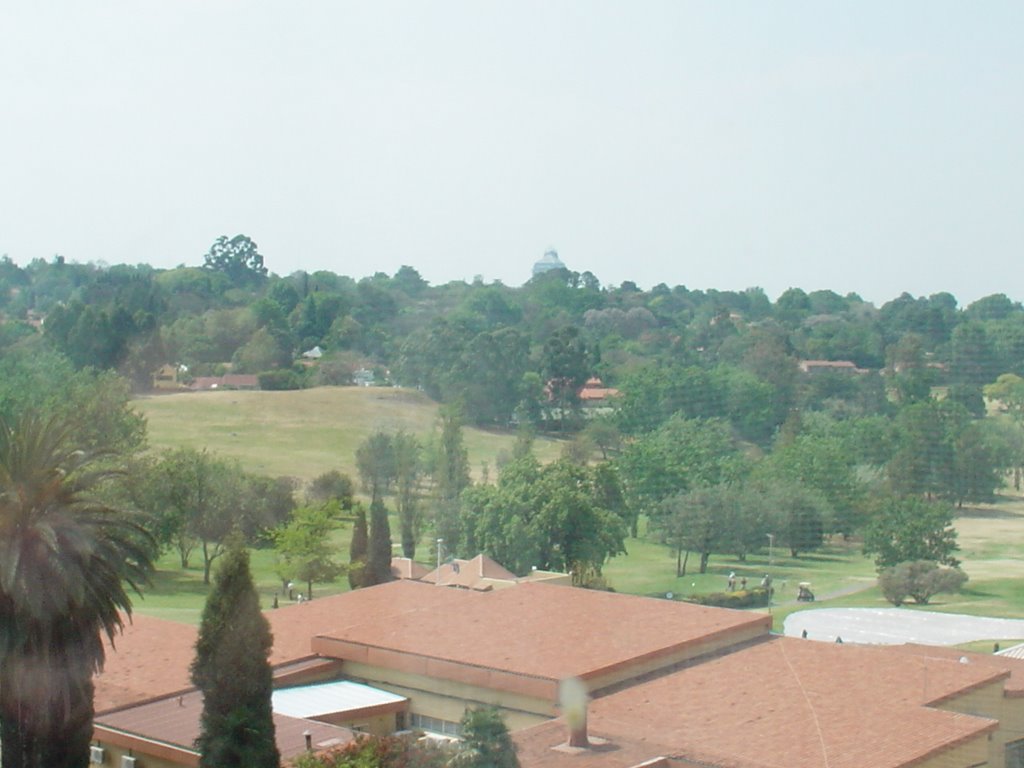
View from my hotel room in Sandton, near Johannesburg.

I had been warned already that transport will have to be managed by taxi. I got a ride from the Oliver Tambo airport to my hotel by a taxi driver from Soweto. He was like a city guide, telling about the city (3 million inhabitants), the province of Gauteng, land of gold (15 million inhabitants) and about Soweto and the 1976 disaster between the blacks and whites, all about the forcing of Afrikaans in schools (of course it was basically about social conditions).

The weather was pleasant with 24 degrees. Driving to the hotel I passed nothing but suburbs. And the first impression is that everyone got his own prison over here. All houses and condominiums have walled gardens, sometimes with bob wire. The whole scenery reminded me of Louisiana in the spring time: green, lots of flowers, especially azaleas, red ground, palms. Everywhere the influence of the Dutch is clear in the names of townships and streets.

Today I will attend a master class on IP Communications – the most prominent new technologies. I hope to be able to report from the conference in the Sandton Convention Centre. The conference is billed as Africa’s most interactive learning and networking conference focused on government technology.

Tags:

Blog Posting Number: 527

Sunday, October 01, 2006

My first trip to South Africa (1)

Today I am on my way to Johannesburg in South –Aftrica. As I have mentioned before, I will represent the World Summit Award at the Government Technology Conference in the Sandton Convention Centre. It will be my first time in South-Africa. I am very anxious to learn to know the country. Besides English, there are people who speak Afrikaans, which is a form of Dutch. I can understand it, but the language has undergone a different development over the years.

The conference is organised by Terrapin Ltd. This organisation works through international offices and organises conferences on the subject in South-Africa, The Netherlands, the Middle East and Asia. The World Summit Award has made an alliance with the organisation and is now involved in several conferences. I will be speaking in Africa and manning the booth of the World Summit Award. At the conference in Amsterdam (9-11 October) Peter Bruck will speak and Thomas Biebl will man the WSA booth. For the Middle East conference (3-5 December) my friend Waheed AlBalushi will speak and be present with a booth. In this way the World Summit Award can carry out its mission and show the e-government applications of 2003 and 2005 competitions.

After the conference I will have some time to explore the country. I hope also to meet some multimedia producers who deliver work products and services in Afrikaans. I hope to interest them for the Europrix.nl 2007 competition of products and services in the Dutch language, which we are starting up in January 2007. It would be great to have a number of Afrikaans products and services.

Tags:

Blog Posting number 526

Saturday, September 30, 2006

No PICNIC for traditional media companies

Traditional media companies in the Netherlands can not relax and enjoy PICNIC 06. That is the conclusion after a crazy week in the Netherlands. The annual Broadcast conference opened in broadcast city Hilversum, while PICNIC 06 started in Amsterdam on the same day. The broadcast conference looks at the present and future broadcast world; PICNIC 06 was promoted as a cross media conference, but turned into a web 2.0 happening. The broadcast conference is already 16 years old, while PICNIC 06 delivered its first edition. The broadcasters invited PCM’s CEO Mr Ton aan de Stegge, a representative of the newspapers, to their conference, and PICNIC invited Talpa’s John de Mol, an old hand in television industry, to sit down on the blanket. Is this just a passage in time or are companies repositioning to become as relaxed as the parties on the picnic? Oh, and the traditional publisher Wolters Kluwer puts its educational division up for sale. Where does that fit in?

Mr Ton aan de Stegge is a warrior. In his last job he was CEO of the telco Telfort and fought with KPN for the lowest tariffs. Eventually he sold the company to KPN at a fabulous high price. After a short period of rest he is back in the arena in the mood for warfare in his own company, in his own industry and outside. At the broadcast conference he posed the view that PCM was a newspaper company with potential, despite the increasing market reduction. So he announced a reorganisation of PCM, but not just the usual one. The HQ staff will be reduced by more than half, from 120 FTEs to 37. PCM will start a newspaper to be distributed for free (There are already two free newspapers, Metro and Spits and there are two newspapers in the making, one by Mr Marcel Boekhoorn and one by Icelandic investors). The existing newspapers should specialise: Trouw should concentrate on religion and the philosophy of life; de Volkskrant attracts singles; NRC Handelsblad should specialise in foreign affairs and economy. Other sectors should get their own newspaper. He would like to acquire Het Financieele Dagblad, but who would not. And he would love to see editions for the Turkish and Surinam people in the Netherlands. He wants to build communities and offer a range of media types such as internet, radio and tv. In this view is eventually not a place for the book division; the ten publishing houses are now officially financial participations; in other words, they can be sold. But his main message was that he wants to create communities around the newspapers.


The World Summit Award was present at PICNIC '06. I am standing here in the wood chips; in the background you see the picnic tables.

The message of John de Mol at PICNIC 06 was simpler. The Dutch Financial Daily observed that John de Mol did not like pick nicking; he just walked in, delivered his speech, did not take any questions and moved out. He did not stay around to experience the pick nick atmosphere of the Westergasfabriek with wooden chips on the floor (were they impregnated), the wooden picnic boxes and the laid back atmosphere. His vision on the future is simple. Television will remain a mass medium as people need to have a common place to meet. But with the new communication infrastructure of broadband a new era is about to appear in five years time. As the consumer can participate in the creative process due to the new infrastructure there will be a profusion of information. Traditional media companies will have to distinguish themselves by creativity and professionalism.

But this was not all that happened this week. PCM and Talpa announced that they are going to set up a news video channel under the name Skoeps. With a small professional staff and 500 volunteers, the video channel should be come the largest video service in the Netherlands.

And if you think that the excitement of this weeks stops here. Forget it. The Dutch publisher Wolters Kluwer announced that it puts its educational division in the shopping window. The company wants to specialise more on publications in the health sector financial services, accountancy, tax and law. It also wants to expand geographically. Besides the company wants to get more out electronic publishing; it presently has 39 percent of revenues coming from electronic products and services and for this year the aim is 45 per cent. The educational division, which is financially healthy, is no longer a core activity as it does not fit the core areas and has geographical limitations for expansion; the educational division is dominated by the Dutch subsidiaries. And you would not believe it: PCM, which is having an educational division of its own, has already signalled to Wolters Kluwer that it is not unwilling to buy the Kluwer’s educational division as it is financially healthy.

This is not just a passage in time. The traditional media companies are desperately repositioning, while the new media are having a picnic, attracting crowds with social networks like MySpace and Hyves, with video services like Flickr, YouTube and Dabble and with citizens participatory journalism in blogs and video journals.

Tags:

Blog Posting Number: 525

Friday, September 29, 2006

25 years of the TCP/IP Internet protocols

Two of the core protocols that define how data is transported over the Internet are 25 years old this month, according to an ISOC press release. The Internet Protocol (IP) and the Transmission Control Protocol (TCP), together known as TCP/IP, were formally standardized in September 1981 by the publication of RFC 791 and RFC 793.

Vint Cerf and Robert Kahn are widely credited with the design of TCP/IP, and many others involved in the ARPANET project made significant contributions.

The core of the documents was RFC 675, published in December 1974 by Cerf together with co-authors Carl Sunshine and Yogen Dalal. The subsequent sequence of documents leading up to RFC 791 and 793 benefited from the participation of many people including Dave Clark, Jon Postel, Bob Braden, Ray Tomlinson, Bill Plummer, and Jim Mathis, as well as other unnamed contributors to the definition and implementation of what became the Internet's core protocols.


"We can't yet say that the Internet is mature," says Brian Carpenter, chair of the IETF, "but it's a great tribute to its pioneers that the two most basic specifications that were published a quarter of a century ago are still largely valid today. I hope the IP version 6 standard will do as well."

The RFC series, which was launched in 1969 by Steve Crocker at UCLA (and edited for many years by the late Jon Postel), continues today as the public archive of the Internet's fundamental technology. Since 1977 it has been hosted by The University of Southern California's Information Sciences Institute (ISI). ARPA support ended in 1998, at which time the Internet Society (ISOC) took over providing funding for the publication of Internet standards. More recently, ISOC extended its support to include other areas critical to the open development of Internet standards.

Tags:

Blog Posting Number: 524

Thursday, September 28, 2006

More than 10.000 dissertations online

The Dutch National Dissertation site has been launched. The database contains 10.000 dissertations, coming from all the Dutch universities.

Annually roughly 2500 dissertations are published in the Netherlands. In these dissertations young scientists present the latest concepts in their field of expertise. Formerly the fate of dissertations was that they were left in the attic or on the shelves of the university libraries. Through internet these dissertations are available worthwhile. Colleagues can search the database for material.

The National dissertation site has been developed within the DARE (Digital Academic REpositories), a programme of the Dutch universities, scientific organisations and the SURF Foundation. The objective is to make the research publications available from one point and without restriction. The dissertations are available as a PDF while the dissertation is searchable on bibliographical data.

This news item reminded me of a lecture I presented at the Technical University in Delft in 1994. I had been asked to present a lecture by one of the students’ organisations about new media. Given my background in publishing the scientific dissertation was at the center of my presentation. The presentation had the eschatological title: Will the printed dissertation hold beyond 2000. Of course a title with a question mark.

In the lecture I took the position that the written and printed dissertation had been and still is the full embodiment of the academic education. Given the rise of the new media, the universities should abolish the obligation to deliver a printed dissertation in order to receive a PhD and should allow multimedia productions as dissertations. The idea of a printed dissertation showed that the candidate was well versed in language and the communication medium of that time, print. I am took the position that universities should allow a multimedia dissertation as this proves that the candidate has learned to communicate well using all modern media, recording it on CD-ROM or putting it on Internet.

A printed dissertation is basically text embellished with graphics and/or photographs. With a multimedia dissertation, an engineer can bring in animations, movies, simulations and 3D. Instead of describing in words a medical process, a movie will be more explicit.

However it is now 2006 and the printed dissertation has survived the change of century. The obligation of a printed dissertation has not been abolished. Only some multimedia can be added to the dissertation recorded on CD-ROM.

Tags: ,

Blog Posting Number: 523

Wednesday, September 27, 2006

Dutch AV heritage gets conservation boost

The Dutch government has reserved 154 million euro for the next seven years on the new budget in order to digitise and conserve 285.000 hours of movies and television programmes as well as 2,9 million photographs. This boost is based on the project plan Visions for the Future.

In the Netherlands there are public and private movie and television archives which date back for one hundred years. These are entertainment movies, documentaries, radio- and television programmes of more than 700.000 hours. A plan written by representatives of the Institute of Vision and Sound, the Film Museum, the National Archive, the Central Discotheque Rotterdam and the Association of Public Libraries as well as Holland Knowledge Land have presented a plan to conserve and digitise 285.000 hours of movies, video and audio and 2,9 million photographs. The material will be made accessible for educational and creative applications. A distribution infrastructure will be developed and a base collection will be available either without any copyright or under Creative Commons licenses. A cost-benefit analysis shows that the project will have a social effect of 20 to 60 million euro. Exploitation revenues, which might total 80 million euro, will be ploughed back into the project.

Such a project looks like a real boost for the audio-visual sector, but it contains several flaws:
A program of digitising and conserving is not new. In the past 10 years the Institute of Vision and Sound has already digitised and archived parts of broadcast programs for the public broadcast companies and for third companies and has received grants from the EU in the past. The Dutch film museum has already collected and digitised material for its most important parts of the collection in the past 25 years.
In the project plan no lists have been published of what will be digitised. It is also unclear whether private collections will be included.
The composition of the project consortium is lopsided; all institutes are subsidised semi-governmental institutes. An institute like Holland Knowledge Land has no knowledge or experience in the field. Not one commercial company such as a movie restoration company or a marketing company has been included.
The project has as objective not only to conserve, but also to exploit. But there is no exploitation plan; this seems to be a Dutch disease. In the past years the Dutch had a mega-billion project in the transport sector; when it was launched it was said that the railway line (Betuwelijn) would be profitable with assignments from the transport sector. The same type of philosophy is now used in this AV project, saying that it will yield 80 million euro, if education and the creative industry use the archives.

The project should not be called off, but it certainly needs a better foundation. The consortium should consist of public institutes and private companies. Public and private collections should be part of the project. Desk research should be done to establish the principles on which material should be digitised. More marketing expertise should be drawn in.

Tags: ,

Blog Posting Number: 522

Tuesday, September 26, 2006

The Hague Telecom Day (6)

In the section application Duco Sickinghe, CEO of the Belgian cable company Telenet, was invited. His presentation showed how a cable operator can improve financial performance with physical services and content applications.

The cable company is a conglomeration of 17 former municipal cable companies. As a cable company it now covers mainly Flanders with analogue TV. The company has started to roll out interactive digital TV (iDTV) in the same area as well as telephone services. But it has also started to offer mobile telephone and operates 1400 hotspots throughout Belgium. Besides customer services it also offers B2B services. Revenue comes from analogue cable TV, internet and telephony with digital television and B2B as growth areas. iDTV has a penetration of 11 per cent after one year of introduction and will reach 66 per cent after 5 years.

The iDTV content offer consists of five pillars: electronic program guide, prime services, thematic channels, on demand and applications. The prime services exist of films and sport. With video on demand the consumers can request of the 2000 movies or a Broadcaster on demand. In the category interactive services, Telenet offers participation television and interactive advertisement, but also walled garden programs such as background information to the Peking Express and timetables for the train.

Commercially Telenet has three bundles which it integrates under the slogan: Surf, chat and watch with Telenet.

(This completes thereporting of The Hague Telecom Day)

Tags: ,

Blog Posting Number: 521

Monday, September 25, 2006

Flash: De Tijd on the future of its digital (news)paper

The Belgian newspaper De Tijd has been one of the first companies to execute a pilot program with digital newspaper. The program has run its course and the experiment was stopped after three months as foreseen. On October 5, 2006, the company and the researchers will hold a press conference about the results. The company will also reveal the future of digital paper as a carier for digital newspapers.

Tags: ,

Blog Posting Number 520

The Hague Telecom Day (5)

In the afternoon of Den Haag Telecom day 2006, some selected applications of broadband were presented. One of them was remote care.

In the Netherlands we are expecting the silver tsunami in less than 10 years we will have an increase of people getting over 65 years of age. This is the aftermath of the baby boom of 1945-1955. Many people will stop working and start getting state pension. It will also mean imply that care for the elderly will have to increase as the silver tsunami will grow and the people live longer. This will pose a problem in health care. The amount of health care workers needed will not keep up with the amount of people needing care. So, remote care is one of the applications being developed.

Of course there are many companies working on this problem worldwide. Yet we have not seen yet an application from Philips, for example. As this company is specialising in health products over the last years, you would expect a product with around one of their main production lines: television. But one of the health care companies in the Netherlands, Sensire, has an application under development. It is a small box with three cables: one for electricity, one for television and one for internet. It is a basic television set with a small set-top box, which includes a webcam. (Again another set-top box, along with the digital television set-top box, the dvd recorder, etc; please folks get out your equipment racks).

The service is basically intended for contact between the client and the care taker. Instead of visiting the client the care taker can now contact the client and talk how he/she is feeling. Instead of getting on the bike or in the car, the care taker can contact more clients remotely, while the general practitioner can diagnose the patient remotely. So the care taker can check whether a client is taking his/her pills, remote consult by the general practitioner, but most of all the set-top box functions also as a Skype with video. Parents can reach their children, who might be living elsewhere, talk to them and see their grand children. So the social effect of this type of application is greater than the traditional telephone.

Personally, I am looking forward to this type of remote care. Having a mother in an old folks home, more than an hours drive away, contact by telephone is not sufficient. She does not see the caller and usually guesses who it is; sometimes she is right, sometimes she mixes up her own children. Visual contact would improve this. It would also make life less lonely for these people, when they can call up their kids (of 56 or so) and their grand children. Besides the care in the old folks home, it would supply an extra pair of eyes.

Sensire is now experimenting with the application. Next year it will start rolling out the application. In fact it should be a mother’s day gift. In the professional care, the client will get a set-top box from the organisation. Other people such as family, relatives and friends can buy the set-top box or link in their computer by downloading software.


Tag:

Blog Posting Number: 519

Sunday, September 24, 2006

The Hague Telecom Day (4)

The conference is (in)famous for its discussion on bandwidth. This subject dominates the annual discussion at the conference. And that is not surprising. Some years ago, the municipality of The Hague hired the consultancy group under the chairmanship of Mr Koos Andriessen, a former minister of Economic Affairs. This group provided Amsterdam, The Hague, Rotterdam and some more cities with the advice to start up a glass fibre network, either public or for municipal use only. In the meantime Amsterdam and The Hague have started their initiatives; other cities are hesitant due to EU rules; besides, private initiatives have started in Nuenen and Lisse and more private initiatives are undertaken.

Mr Konstatinos Apostolatos, managing director of Arthur D. Little stirred the discussion at the Den Haag Telecom Day. He posed the thesis that until 2011 capacity for no more than 50 Mbps for downloads and 8Mbps for uploads would be needed. Even HDTV should be no problem for the cable. Eurodocsis and VDSL should be sufficient for the coming decennium. When more capacity should be needed, cable companies could give priority to its own services.

Despite the fact that broadband already has a great penetration in the Dutch households, the market will grow with 6 to 8 per cent till 2011 and 6 per cent thereafter. But not the subscriptions will push the financial performance of the cable companies, but the extra services such as Video on Demand, interactive television, HDTV. Annually till 2010 the turn-over per client (arpu) will climb to 65 euro per month, which represents 3,1 per cent. In the extra services the cable companies will get competition from the telecom companies like KPN and Tele2-Versatel.

ADL recommends that regulators adopt the following four key migration paths towards Next Generation of Great Broadband:
- Stimulate Market-led transition to NGNs
- Limit State Aid for NGNs only to cases of clear market failure
- Stimulate NGN-Infrastructure competition going forward
- Broaden the EC’s approach to Market Definitions – “Think out of the box”

Mr Apostolatos got under fire as he quoted from a study, which ADL performed for Liberty Global, the parent company of the cable company UPC. As delegates could sms their opinion during the presentation, Mr Apostolatos was reminded of the famous last words of Ken Olson on mini computers and Bill Gates about the capacity of the PC. Of course KPN and companies like Eurofiber and Fastfiber proclaimed a different point of view. They are supported in this view by a market research movie of the provider Ilse. In this movie a father and mother of about 40 years old tell about their experience with Internet. Dad downloads through Limewire and Mam plays games on Zylom; they both send photographs and movies to family relatives, who have emigrated.

Tags: ,

Blog Posting Number: 518

Saturday, September 23, 2006

Flash: Dutch government sells last KPN shares

The Dutch government has no shares in the incumbent telco KPN any longer. It has sold it last 167 million shares, which represented 8 per cent for about 1.7 billion euro. KPN will buy back about 80 million shares for about 800 million euro. The rest will go the American banks Goldman Sachs and the Citigroup for sales.

Tags: Tags: ,

Blog Posting Number: 518

The Hague Telecom Day 2006 (3)

In the first section of the meeting, KPN was planned to make a presentation, entitles: Why KPN invests 1,5 billion euro in an open ALL-IP network. As the question mark is lacking in the title, it is already a certainty that KPN will start this project. In fact it was announced in March of 2006. Mr Paul J. Hendriks told in 10 minutes the argumentation: KPN need a new and faster conduit in order to distribute content. He did not mention the controversy the plan has stirred as KPN might leapfrog over its competitors.

KPN wants to upgrade its network. Presently the network is a hybrid network of coax cable and fibre glass. Fibre glass already links the exchanges. But now, KPN wants to go further and go to street level connecting 28.000 distribution boxes in the streets bypassing the exchanges. Great plan, isn’t it?

But this exactly were the problems will begin. In the present exchanges third parties such as Bbned and Colt Telecom have located their xDSL equipment. By bypassing the exchanges and by dismantling most of them, KPN creates a problem for those third parties as to the location, where to put there equipment and of course under what conditions.

Recently KPN has been rather aggressively gathering ADSL clients from competitors. It started when Tiscali sold 60.000 clients to KPN, as they were serviced over the KPN network. After that a small competitor had an argument and subsequently a payment problem with KPN; KPN closed off the clients and made them an offer to subscribe to KPN services (Planet Internet, Het Net and XS4ALL). KPN got away with that action. Last week KPN bought the remainder of Tiscali 276.000 subscribers.

The question arises whether KPN is on a course to duopoly, two network powers: telecom and cable. This would mean a choice out of two operators and hardly any competition. That would be contrary to the development of the last years, whereby the unbundling of the local loop has generated competition. This has brought the Netherlands to the top ranking of the broadband league. So companies are now anxious to see what is going to happen. Will KPN allow the competitors on the fibre glass network and against what conditions. And will these conditions be checked by the telecom watch dog OPTA before or after. Of course, in the meantime third parties will have to make extra costs for the new constellation.

Not everyone is convinced that this KPN network upgrade is a frog’s leap into duopoly. The Dutch and European telco watch dog will not allow that.

Tag: Tags: , ,

Blog Posting Number: 517

Friday, September 22, 2006

The Hague Telecom Day 2006 (2)

Malcolm Matson, the former CEO of COLT Telecom, kicked off the meeting as a representative of the foundation Open Public Local Access Network (OPLAN). It looks like he got thinking after his Colt time by founding the foundation with the object to advance the education of the public about all aspects relating to digital technologies and their social and economic benefits particularly as deployed in open public local access networks (OPLANs). The title of his speech was one of the classics these days: The end to traditional telecoms. (Where did I hear this before; just give me any area and you have such a title: the end to traditional publishing and the end to traditional broadcast). Behind this worn title, however, was a vision on telecom and society.

He did not mince many words about the traditional telecom business model. This was a vertically integrated business model, which does not work in the MSN and Skype world any longer. Malcolm Matson gave the audience a kind of creed. Traditional telecom is facing disruptive and abundant digital technologies. This brings another economy about in which local economies will prosper and cities, citizens and societies will benefit. But also the human spirit and relationships will thrive through them as people are in a constant conversation with themselves. This will eventually lead to improved investment risk/return from funding them. His full presentation of 72 sheets is available.

Pursuing the theme of OPLANs was Esmee de Guzman Vos of Muniwireless. The tiny fragile lady is an expert on municipal wireless cities. On September 10th, she released her report on the US wireless cities and concluded that there were 60 operational networks funded on a public/municipal base, 35 municipal use only networks, 135 planned networks and 25 areas under consideration. Esmee went into the financing structure and the deployment structure. Financing has three models: public, municipal, public and municipal funding. Deployment can range from free networks to public/closed networks and networks for municipal use only. In the Netherlands public wireless networks started in Leiden and its surrounding towns and villages such as Jacobswoude. So far wireless networks are not a craze and even in Amsterdam there is not a public or municipal network, even not in the central station and/or museum area.

It is interesting to see that telecom is changing fast now. In 1980 the early adaptors of new media were all using the example that a local computer call from Amsterdam to Rotterdam could go through New York. Now it is all happening (see her presentation). In fact new applications have overtaken voice traffic in the Netherlands since February 2005. So far this has lead to the rise of telecom companies and the competition among these companies. But in the coming years the constant conversation should break the commercial harness and benefit cities, citizens and societies.

Tags: ,

Blog Posting Number: 516

Thursday, September 21, 2006

The Hague Telecom Day 2006 (1)

It has become a tradition, the Telecom Day of the municipality The Hague. Last year I followed the webcast, which was not entirely a success; so this year I decide to move my body through time and place and be there.

It is an annual event, where toute telecom of the Netherlands was present. The program was interesting; the theme was Open networks, new applications. The first part was aimed at Open networks; the second part was about the applications. Were there surprises? Not really, but there were some highlights. The open network section was full of spectacle: open networks, an all IP network for KPN, Free Wireless internet in the public sector and broadband in an international perspective. The second part was centered around applications.

Open networks
This section was opened by Malcom Matson, founder of COLT Telecom and chairman of the Open Local Area Networks (OPLAN) Foundation. In his presentation Malcolm Matson just toppled all the traditional business propositions. From paid to free, from profit to societal gain. The presentation of the incumbent, KPN, was impressive. KPN wants to invest 1,5 billion euro in an ALL IP network. It sounds good, but it remained unclear how KPN was going to make this network profitable, while loosing money on the fixed network. Challenging was the presentation of Esmee de Guzman Vos of Muniwireless on Free Wireless Internet in public spaces. Konstantinos Apostolatos of Arthur D. Little, talked on the conclusions of their latest report on broadband; I enjoyed reading the summary of the report as it slapped the hands of the glass fibre mafia.

Applications
With the theme of open networks you are talking about broadband and fast networks. What this means to the application field is not new. Video on Demand, streaming video, downloading video, it is all possible. But is this really new? The company 2way Traffic had all the buzz words right, multi-platform (or cross media platforms?) multi-media and of course multi-bucks in the entertainment sector, but it was not impressive. Really impressive was the theme about remote care. Also impressive was the story of the Belgian cable operator Telenet; it is a cable operator, but earns more money on other services.

In the coming week I will treat some of the Open Network and applications presentations.

Tags: ,

Blog Posting Number: 515

Wednesday, September 20, 2006

Belgian newspapers force Google to negotiate

Google is not allowed to publish text and photographic news items from French and German language newspapers in Google News in Belgium. According to the Belgian judge Google infringes on copyright. The court case was instituted by the Belgian newspaper publishers. The ban will start next Monday; when Google continues publishing news items if will forfeit 1 million euro a day. Google had already removed news items from newspapers such as Le Soir and La Libre Belgique.

It is interesting to see that the French and German language newspapers have forced the ruling. They were united in the company Copiepress. Not part of Copiepress' court case was the band of Flemish newspapers as some newspapers had already been withdrawn by Google.

The judge based his ruling on the expert opinion og Luc Golvers, the internet expert and chairman of Belcliv, the Belgian club of information security. Golvers considers Google News as a news portal and not as a search engine. AS the articles are cached, vistors can still read the item, even after the publuisher has removed it from his own site. In the opinion og Golvers, newspapers loose control over their own copy and revenues. The judge remarked that Google gets 13 million euro a day of advertisemnet revenues; part of this is taken from the newspaper publishers.

The judgement has been hailed by all newspaper publishers’ associations in Belgium, Europe and worldwide. A spokesperson of Copiepress does not see the ruling limited to Belgium. She notes that there is a growing consensus to force Google to respect copyright.

The world association of newspaper publishers AMJ is of the opinion that this ruling will give the publishers the right to have a say over the application of their content. Within the AMJ a working party is already busy drawing up conditions such as usage and pay for third parties, who want to publish news items.

Not only the newspaper publishers are relieved by the ruling, but also the associations of journalists in Belgium and the Netherlands have applauded the ruling. They think that Google will be forced to come to the table and negotiate.

It looks like Google either is unsure about the ruling or is taking revenge on the newspapers which started the court case. Whoever is searching for "site:lesoir.be" will not get any results any more about the newspaper Le Soir. It is unknown whether Google will appeal the ruling. Google is still facing a lawsuit in France by Agence France, which wants to be compensated for illegal use of its press releases.

Tags: ,

Blog Posting Number: 514

Tuesday, September 19, 2006

Folklore and new technology

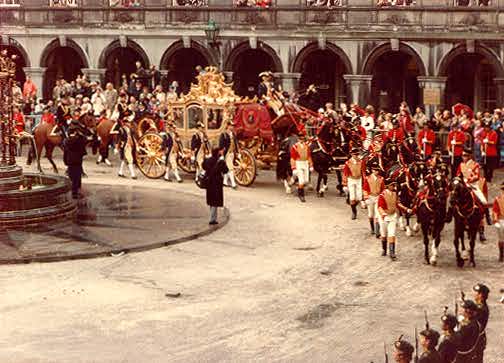
Today is a colourful day in the Dutch government centre of The Hague. Today it is princes’ day. It is a rather folkloristic event, in which the Queen and members of the royal family figure. Queen Beatrix will be carried around in the Gold carriage (for a pdf cut-out model) from her palace to the Houses of Parliament, while the prince royal, Prince Alexander, will follow with his consort Princess Maxima. The royal tifosi will line the route. The royal family is still rather popular in the Netherlands and has become more popular since the wedding of the heir apparent with Princess Maxima. Even convinced republicans (like me) have no problem with the royal family as Beatrix takes her task seriously and Prince Alexander and Princess Maxima are seriously performing in respectively water management and micro-credit.

This folkloristic event is coupled to the annual opening of the Dutch parliament. After the tour Queen Beatrix enters the Parliament building and reads a document comparable to the State of the Union. The wording of this document has been made comprehensible over the years. All the members of parliament, consisting of two houses, are present. Especially the lady members of the parliament compete with each other in wearing hats; it looks a little like Lady’s Day in Ascot (England). This year the competition will be stiff as there will be elections in November.

On this day the budget for 2007 will also be presented. The minister of Finances will show an attaché case to the members of parliament. So far this budget, including the departmental budgets, addenda, press releases and other papers, have been presented in print; the volumes of this printed work weighs over a kilo in paper. But this will change this year as journalists will receive the budget on a 1Mb USB memory stick.

The budget was already published on a CD-ROM for some years as a product of the Staatsdrukkerij, comparable to Her Majesty’s Stationary Office (HMSO) in the UK. But as an extra service to the journalists, they will receive the complete text and graphics on a memory stick, so that they immediately can call up the texts and start writing.

(USB-memorysticks have regularly been the talk of the town. Police dettective and high ranking miltary officials have been negligent with these sticks. They were found lying around hired cars or were stoilen from their cars. Trying to save money, the police and military administrators did not buy protected USB memory sticks.)

Text:

Blog Posting Number: 513

Monday, September 18, 2006

Meeting a fellow WSA ambassador

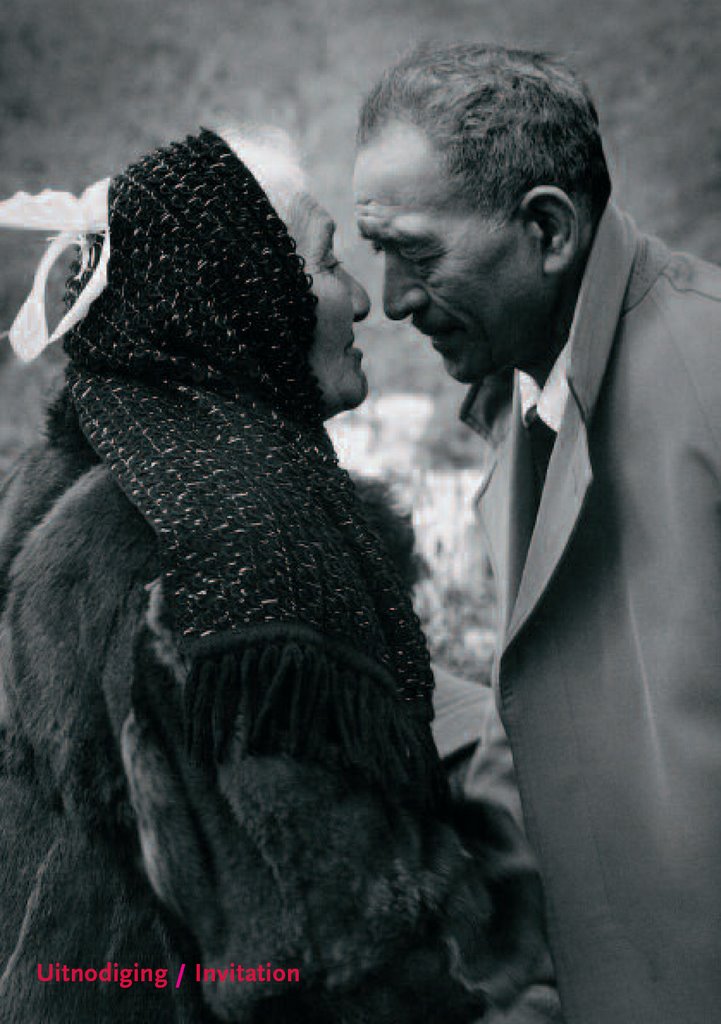
It was the official opening of the Ans Westra’s Exhibition at the museum of Ethnology in Leiden yesterday. Ans Westra was an immigrant from the Netherlands to New Zealand and recorded in photographs of people especially the native Maoris from 1959 till 2004. It was not a surprise that the ceremony included a performance by the London-based cultural group, Ngati Ranana (see the photograph at the museum's site). The photographs are exposed inside in a big hall, but also outside, where I did discover several dishes, piping in permanent information in the museum. The photographs show the characteristic heads of Maori people. The exhibition had also yielded a DVD for schools and a broadcasting program, of which I got a preview.

I was invited by Jan Bieringa. There are two things to this name. When someone is called Jan in the Netherlands you think of a man. And Bieringa is a very Dutch name. But the name belong to a charming lady living in New Zealand, who is married to Luit Bieringa, a Dutchman who emigrated 50 years ago; in English the name Jan can belong to a woman and in this case does.

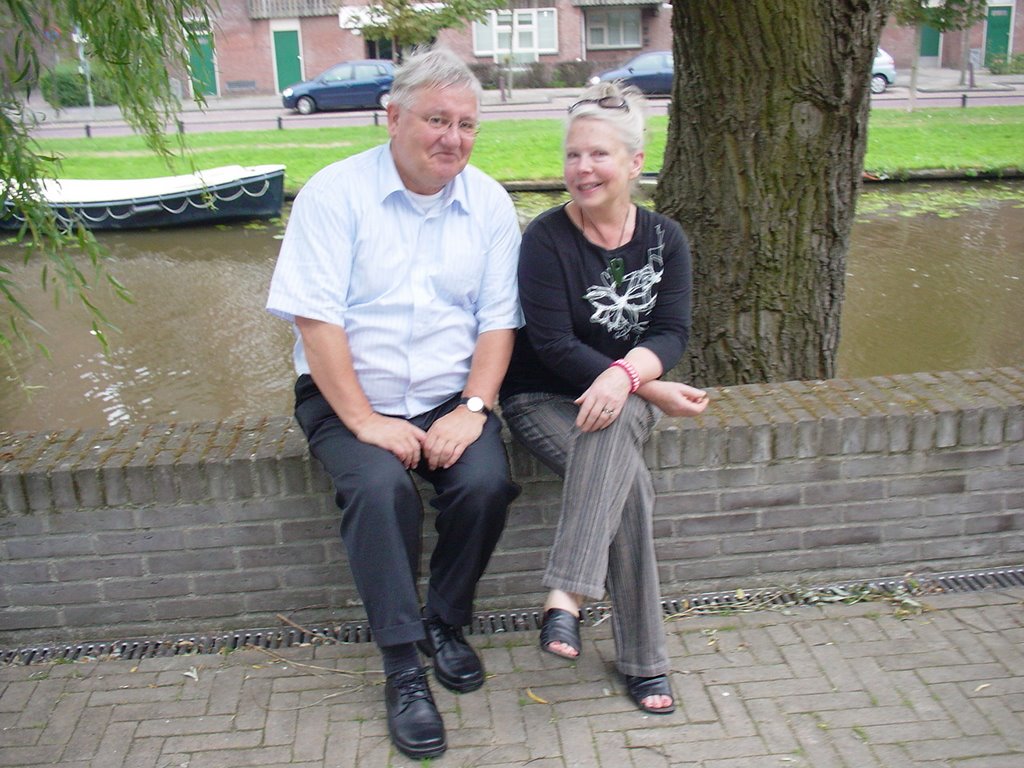
I met Jan Bieringa (see photograph) in 2003 in Dubai. She was one of the 35 jury members for the World Summit Grand Jury. In New Zealand she has been a promoter of new media. She has a background in cultural matters such as museums and galleries. Presently she is still active as an ambassador for the WSA in New Zealand and expanding to the Pacific islands like Samoa and Fiji. Ever since we stayed in touch. In 2005 I met her again at the UN World Summit on the Information Society (WSIS) in Tunis. With Jan she produced the DVD for the schools and the broadcasting program for this exhibition.

Tags:

Blog Number Posting 512

Sunday, September 17, 2006

Brill-Google symbiosis

Last Thursday, I was the guest of Brill, the scientific publisher headquartered in Leiden, the Netherlands. The company held an open house meeting with two subjects on the slate: Google and China. The company is a stock listed company in the Netherlands with a turn–over of 25 million euro last year and with a regular revenue stream, delivering an average of more than 10 percent in returns. The focus of the company is on humaniora and international law. The company publishes some 100 journal titles with 500 issues per annum. It has series of major reference works such as encyclopaedias, annuals and bibliographies. Well known is the Encyclopedia of Islam. I heard first of the reference work in 1970, when I became an editor humaniora for the Dutch language Great Spectrum Encyclopedia. An in 2005 they published some 500 new monographs. It is an impressive record. But I did not come to the Open House meeting as a shareholder, but I was eager to hear about Brill’s involvement with Google.

For this item, Google had flown in Jason Hanley from London. He started with the mission of the company: Google is to organise the world’s information and make this universally accessible and useful. This statement sounds rather idealistic and ambitious and it is. If you look at the universe of books, you will find out that only 5 per cent of books are in print, 75 per cent have an unclear copyright status (copyright reverted back to author or heirs or the publisher was sold) and 20 per cent are in the public domain; so more than 90 per cent of the books published are hard to access.

The Google Book Search program consists of the Publishers partner program and the Libraries program. Brill is partner in the Publishing Partner Program since 2004. Google scans the books published by Brill and make them searchable; the browsing however is limited. Part of the pages of the book can be read and a portion is always hidden at all times, while the print, save and copy facility are disabled. And if people want to buy the book they are linked to the Brill site. Books are also sold as e-books through channels such as Netlibrary, eBrary and e-Booklibrary. Advertisement yields incremental revenues; but advertisements are optional and not mandatory. Jason Hanley indicated that Google had spread confusion in the Google Print program, making not clear that a publisher would partake voluntary and could not be forced; besides authors could refuse to be in the program.

For Brill the Google project is a big project. Brill publishes annually 550 new titles and has a backlist of 6000 books in print. Brill has a legacy of 5.000 books out of print. This legacy is rather large as Brill recently bought IDC, which has 100 million pages of rare books. Presently Brill has 500 titles live and every new book is loaded up immediately after publication. In the meantime the out-of-print list and the backlist will scan and brought online. Presently Brill is presently preparing a shipment of 3.500 books to California in order to have them scanned and mounted.

For Brill the Google Book Search Program has been a marketing and sales tool. So far it has brought 3 million page views from half a million visitors. Some 10.000 clicks through Google search (50 percent) and Google Scholar (5 percent) link to the Brill site for more information or for ordering books. Income from advertisement revenues is not significant.

Jason Hanley got a barrage of questions after his speech. Most prominent was: What is the catch; the publisher gets his books scanned and mounted as a free service? Jason referred back to the mission. He mentioned that a publisher can always withdraw from the program; so far no publisher has done. (If a publisher decides to leave he will not get the material which was scanned on the account of Google). In fact the only risk for the publisher is not to join. Another question was whether Google will add material presently on microfilm (IDC has an extensive microfilm archive of 200.000 titles). Jason, who is an ex-Elsevier employee, got also the question about the impact of the Google Book Search program for scientific, technical and medical (STM) publishers. He could not say what the impact was. For Brill it means that its content gets discovered. And pressed for a comparison between Brill and Elsevier, Jason noted that Elsevier has signed up with Google Book Search program, but that the company has larger levels of hesitation. Besides Elsevier develops its own content tools and software. For Brill the Google Book Search program has generated revenues without investment; to the world the program has made the Brill books accessible.

Tags: ,

Blog Posting Number: 511